Two things decide a flood claim. A form, and a water line.
Flood is a separate policy from your homeowners insurance, with its own rules, its own deadlines and its own paperwork. Most of these claims are decided by whether the sworn proof of loss was filed correctly and on time, and whether the evidence was still there when the adjuster arrived. Both get lost by accident, by homeowners doing what any sensible person would do.
The water line
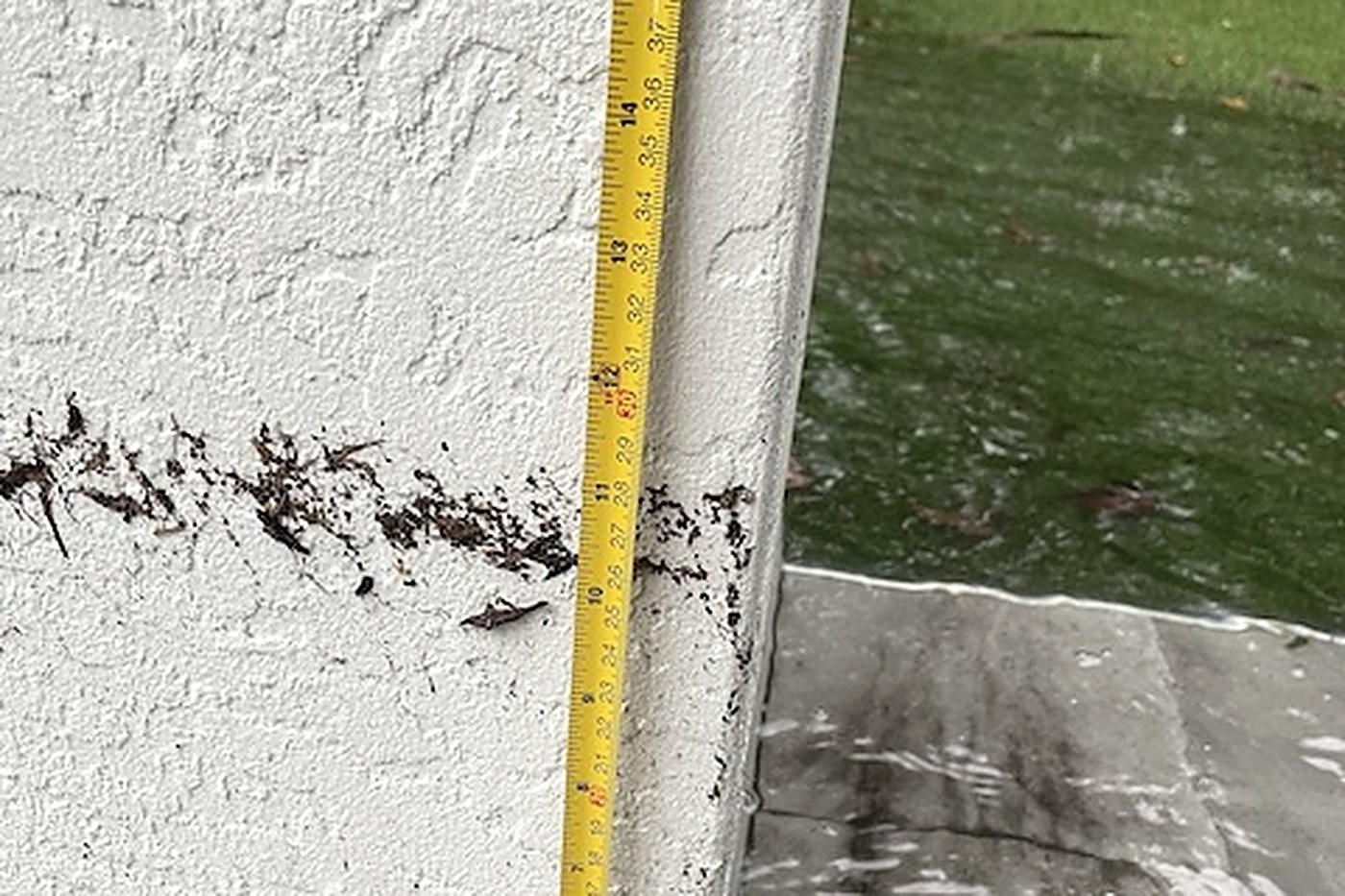
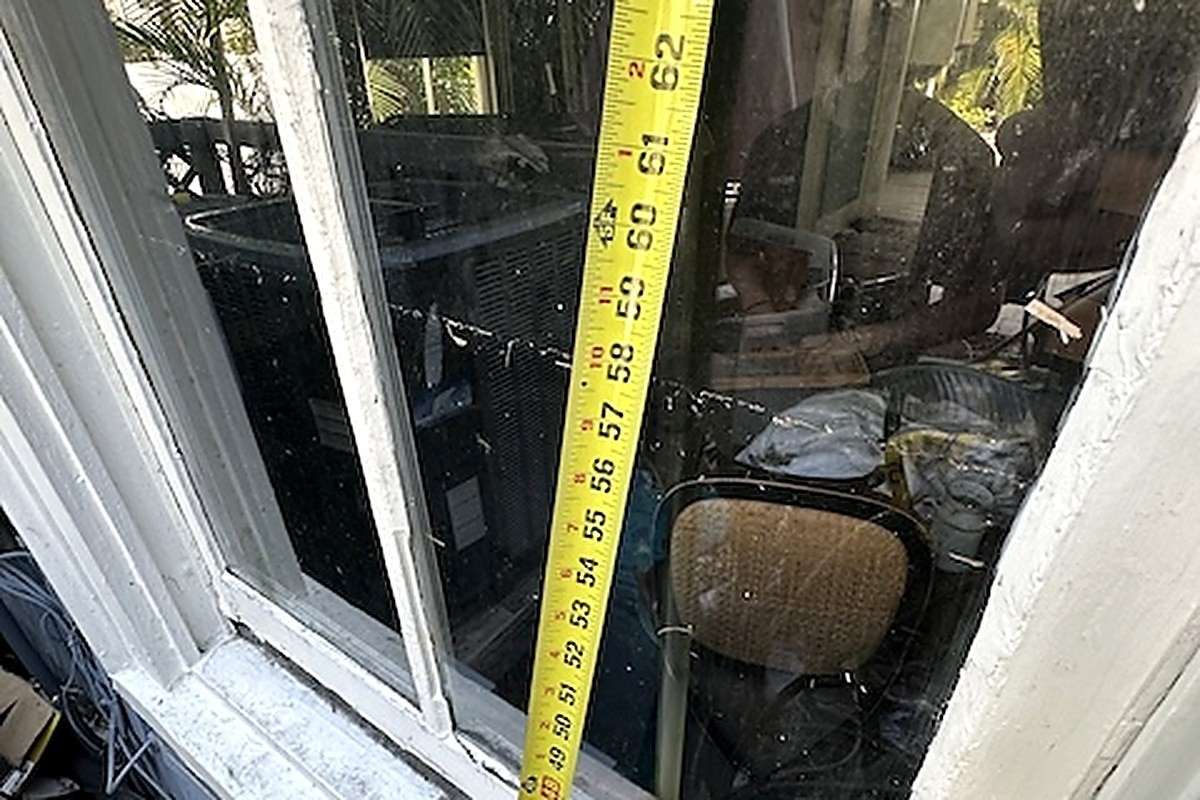
I arrive at flood losses to find the homeowner has already cleaned the exterior of their home, or removed all the sheetrock inside, without any video or photographic evidence — doing exactly what a responsible person would do after a flood, and destroying the only physical record of what happened. The adjuster needs that line to justify paying you. Without it, the height of the water becomes a matter of opinion — and proving your loss is your burden, not your insurance company’s.
- Leave the water line alone, inside and out.
- If it’s necessary, photograph and video everything first.
- If the water line has to be cut out, measure it in the photographs first.
- Wave action can reach above the line, and should be included in your estimate and documented correctly.
The sworn proof of loss
You have 60 days from the date of loss to file a sworn proof of loss on a flood claim. There are no exceptions unless an extension is granted.
- File the sworn proof of loss before sixty days from the date of loss.
- Extensions exist, and almost nobody knows it. Extensions will be found on the NFIP website.
- An extension moves the date. It doesn’t remove the requirement.
- The clock runs from the date NFIP declares the storm made landfall.
- It has to be an approved NFIP sworn proof of loss form.
- File it yourself, on time, no matter what anyone tells you.
This is work I do for my clients. I prepare and complete the sworn proof of loss on the approved NFIP form, correctly, and file it inside the deadline. If you take nothing else from this page, take this: don’t let the deadline pass because you assumed somebody else was handling it.
What flood insurance doesn’t cover
Flood doesn’t work the way your homeowners policy works. People assume the two policies behave alike because they both say insurance on the front. They don’t, and the differences below are the ones that cost the most.
- There’s no additional living expense on a flood policy.
- Nothing outside the foundational footprint.
- Below grade is treated as a basement, and sunken living rooms are considered such.
- Two separate deductibles. One for the dwelling, one for the contents.
- Contents are paid at actual cash value on the NFIP policy.
The contents inventory is where the money quietly goes
Contents are settled at actual cash value, NFIP depreciates them by the book, on industry standards and that depreciation isn’t recoverable. There’s no second payment when you go and replace the item. What they pay is what you get.
Which means the year you write beside each item on the inventory decides what you’re paid for it. Most people guess, because they’re exhausted and it feels like a detail. It’s not a detail. It’s the number your payment is calculated from.
One thing worth checking before you start. If your flood coverage is a private policy rather than the NFIP one, read how it settles contents — some private forms pay replacement cost on personal property. The NFIP policy never does.
- Don’t estimate the year.
- Receipts and invoices are better than memory.
- If you remember where you bought it, ask them.
Increased Cost of Compliance
If your community declares your dwelling substantially damaged, your flood policy can pay up to $30,000 on top of your building payment to bring it into line with current floodplain rules. It’s called Increased Cost of Compliance, it’s already in your policy, and most people never learn it exists until somebody tells them.
- The community makes the call, not your adjuster. It’s the community building official who determines that flood damage has equaled or exceeded 50 percent of the value of the building, or that the building has been repeatedly damaged. That determination is what opens the coverage.
- It pays for four things. Elevating the building to or above the base flood elevation, relocating it, demolishing it, or floodproofing — and floodproofing applies to non-residential buildings only.
- It pays for the compliance work, and nothing else. ICC applies to the building and covers the cost of the measures themselves. It’s not more money toward your repairs and it does nothing for your contents.
- There’s a ceiling on the total. Up to $30,000, and your building payment and ICC together can’t exceed the NFIP’s overall limit.
- Your property has to be in a high-risk flood area and covered by a flood policy. This is a coverage inside the policy, not a grant.
Is ICC a separate claim?
Officially, no. One flood event gives you one claim, and ICC is a request for additional benefits under Coverage D of that same claim — not a new one.
- The ICC portion has its own proof of loss. That clock starts at the community’s letter, not the flood.
- You have six years from the date of the flood to complete the work.
Your flood claim settling doesn’t mean I’m gone. ICC runs on its own clock and can outlast the rest of the loss by years — the community’s letter, the separate proof of loss, then the work itself. I stay with it, and with you, until the file is finished and closed.
Getting paid
You may be offered an advance
On a severe loss the adjuster will often have you fill out a request for an advance against your contents payout, your dwelling payout, or both — so you can buy clothing and food and start work on the house without waiting for the claim to settle.
Take it if you need it, but understand what it is: an advance comes off your final settlement. It isn’t extra money and it isn’t a separate payment. It’s your own claim, early.
The check goes to the address on your declarations page
Which, after a flood, is frequently a house nobody can live in and nobody is collecting mail from. That’s how checks go missing, and there are people who watch for exactly this after a storm. Getting a stolen check stopped and reissued can take months.
Get a secure temporary mailbox somewhere you can actually reach, and make sure the address on the claim is changed to it. Do it early, before anything has been approved for payment. This applies to an advance as much as to the final settlement.
- Ask for the inside desk adjuster’s name, phone number and email.
- Change the mailing address in writing, and confirm they have it.
Golf courses and clubs
The buildings are insurable in the ordinary way. The course generally isn’t, and that is where clubs get caught.
- The playing surface. Greens, tees, fairways, bunkers and the land itself.
- Landscaping and cart paths.
- Most property in the open.
- Lost revenue while the course is unplayable.
Additional golf course flood information is located here: Golf Courses.
If you had no flood policy
You can apply for FEMA assistance after a declared disaster even if you never had flood insurance — and even if your home sits in a high-risk flood zone. Not carrying the policy doesn’t disqualify you. A great many of the Florida homes that flood were never in a flood zone and never had a reason to buy one.
But there are two things to understand: what FEMA needs from you first, and what accepting the money commits you to afterwards. Almost nobody is told the second one.
First: FEMA needs to see what your insurance did
FEMA can’t pay for a need that another source has already met, so if you carry any insurance at all — homeowners, windstorm, anything — they need proof of the settlement, or a letter showing you were denied, before they can work out what you qualify for. Without one or the other, the file simply sits.
Which means the denial letter you were dreading is the document that gets you in the door. If you have damage, report the loss to your carrier, and get their position in writing. A phone call telling you it isn’t covered is worth nothing here.
Second: taking the money commits you to flood insurance
This is the part that surprises people, sometimes years later. If you receive FEMA assistance for flood damage to a property in a high-risk flood area, you’re then required to obtain and maintain flood insurance on that property. Let it lapse and you can be made ineligible for federal disaster assistance there in the future.
FEMA usually covers the first stretch itself, buying a Group Flood Insurance Policy out of your grant — roughly $2,400 for three years of coverage. When it runs out, buying the next policy is on you. And the requirement stays with the property: if you sell, you have to tell the buyer it’s there.
- Report the loss to every carrier you have. FEMA needs either proof of your insurance settlement or a letter showing you were denied. Neither document exists unless the loss was reported. Get their position in writing.
- Get the settlement or the denial in writing, and keep it. On a flood loss with no flood policy, that letter is the most valuable piece of paper you own.
- Understand what FEMA assistance is. It’s not insurance and it’s not a settlement. It covers basic, necessary costs to make a primary home safe and livable, it’s capped by statute, and it won’t return your home to its pre-loss condition.
- If you take it, budget for flood insurance from then on. Not for three years — permanently. It’s the price of the help, and it’s cheaper than finding out the hard way after the next storm.
I don’t handle FEMA claims. I’m not licensed for them and I’m not going to pretend otherwise. This is here because you should know the help exists and what comes attached to it.
What to look for in your policy
A flood policy is a federal form. It reads nothing like your homeowners policy and it doesn’t behave like it. Get it out and look for the items listed below before you need any of them.
- Flood policy, do I have it? It’s a separate policy, so be sure to check.
- Your two deductibles. One for the building, one for the contents.
- Your building limit and your contents limit, and whether you bought contents at all.
- Whether it’s an NFIP policy or private flood.
- Increased Cost of Compliance. What it pays for.
- Replacement cost or actual cash value on the building.
- The proof of loss requirement and the time limit on it. The sworn proof of loss.
- What the policy says about below grade. Below grade is treated as a basement.
- Your flood zone and your elevation certificate.
- Renewals often change policies. Review all endorsement changes.
After a flood loss: Dos and Don’ts
Dos
- Photograph and video everything before you touch anything. Every room, not only the ones with obvious damage. Wide shots that establish where you are, then close-ups. Do it while the water line is still on the wall.
- Measure the water line with the floor in the same frame. A tape against the wall with no floor in the picture proves nothing. The water line.
- Calendar the sworn proof of loss the day you report the claim. Sixty days from the date of loss, and ask in writing whether an extension has been issued. The sworn proof of loss.
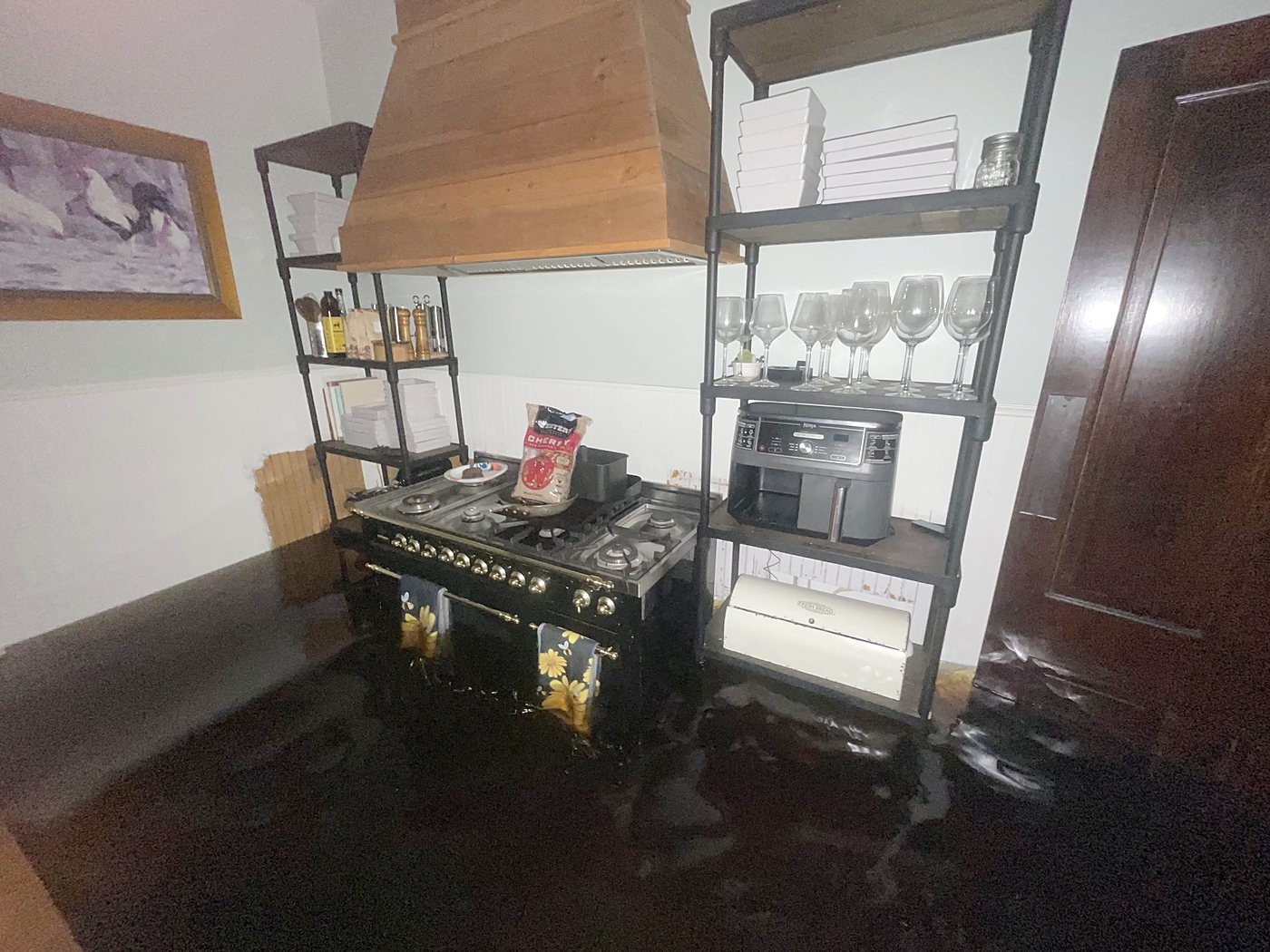
- Photograph the contents where they sit, before anything is moved out. Then build the inventory room by room, with a real purchase year beside each item.
- Protect the property from further damage, and keep every receipt. That’s your duty under the policy.
- Ask your community building official where the substantial damage determination stands. That determination is what opens Increased Cost of Compliance.
- Keep dated notes of what surfaces later. Floors that cup, doors that stop closing, smells that arrive weeks later.
- Document every conversation in writing afterwards. A short email confirming what was said is enough, and it costs you nothing.
Don’ts
- Don’t wash the water line off, inside or out. It’s the one piece of evidence that fixes how high the water was, and it can’t be put back.
- Don’t cut out the drywall before it’s photographed and measured. Once the wall is cut to a line, the height of the water is whatever the file says it was.
- Don’t haul the contents to the curb before they’re documented. A pile at the road is not an inventory and nobody can price it afterwards.
- Don’t guess the year on the contents inventory. Contents are paid at actual cash value and that depreciation isn’t recoverable. The year you write is the number you’re paid from.
- Don’t let the sixty days run out. A claim isn’t denied for being wrong nearly as often as it’s denied for being late, and it can greatly affect your settlement offer.
- Don’t assume your homeowners policy fills the gaps. There’s no additional living expense on a flood policy and nothing pays for the hotel.
- Don’t assume a FEMA payment closes out your loss. Take the help if you need it — that’s your call. Just know it’s assistance rather than a settlement, and that accepting it carries a condition. If you had no flood policy.
This isn’t everything. Your policy carries conditions and duties that apply after a loss, and they’re yours to meet whether or not they appear here. Read your own policy in full. If something in it doesn’t make sense, call me — it’s a twenty-minute phone call about the loss, whether or not you hire me.
These are the ones specific to this kind of loss. Select the link for the Dos and Don’ts that apply to every claim.
The call that matters
If you have had a flood loss, call or email me before you start cleaning up. Not because you couldn’t handle it yourself, but because the decisions that determine what your claim is worth get made in the first days, and once they’re made they’re hard to undo. It’s a twenty-minute phone call about the loss, and I’ll tell you plainly where you stand and what to photograph before anyone touches anything.
You stay in control of your claim. That’s the whole point.